








Disclaimer: This article was delayed from publication due to administrative review, which altered coverage of the topic.
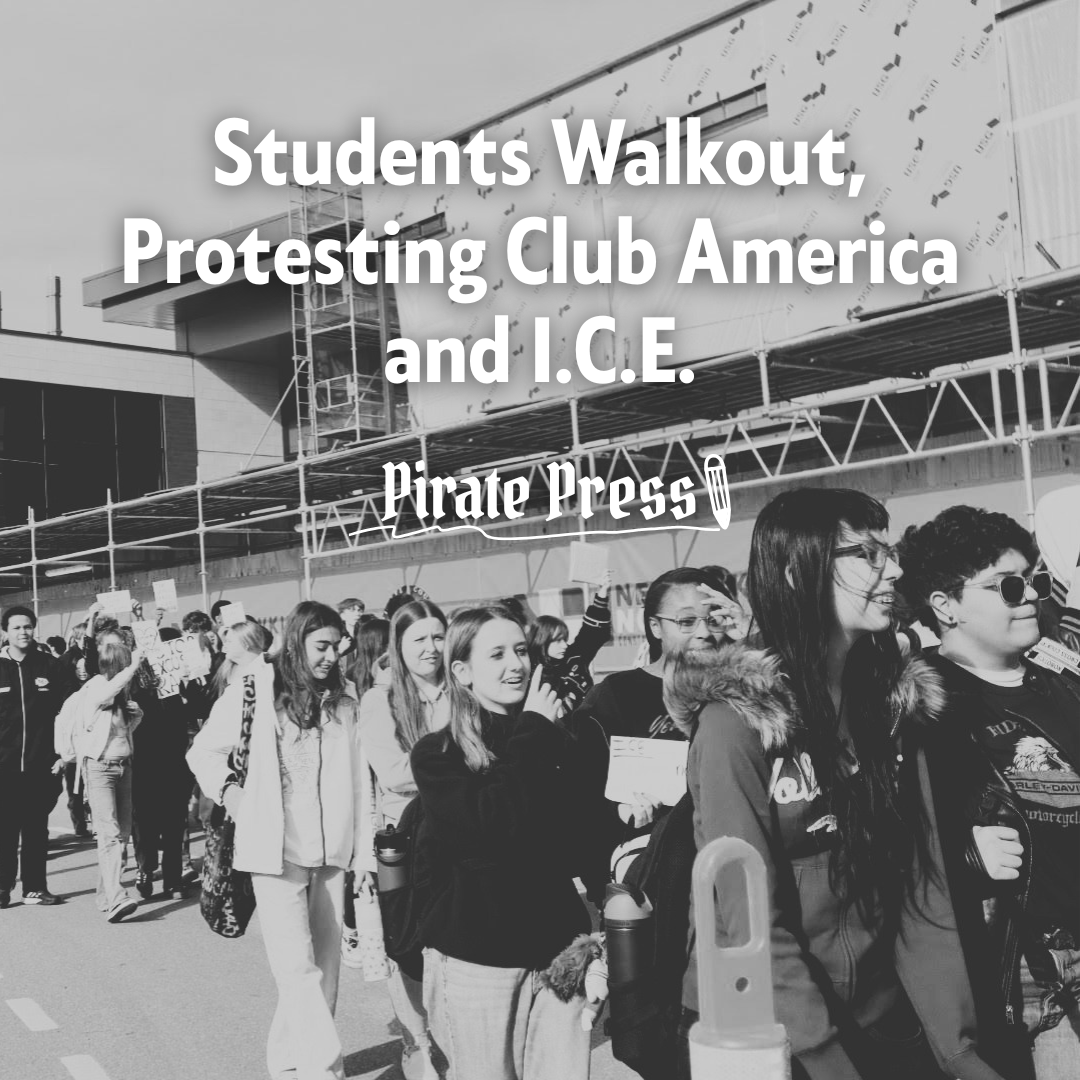
A student-led protest took place on Friday, Jan. 16, 2026, starting in the bus loop at the beginning of Anchor Time. Followed by school resource officers, the student participants protested the school’s Club America chapter and I.C.E. as ideas rather than individuals, drawing participants from across the school who walked around campus holding handmade signs.
While parading from the bus loop, protesters chanted “we want justice, we want peace,” as they moved along 92 highway down to the football field. They formed a large circle where, through a shared megaphone, students told stories about feeling targeted, divided, or unheard, their voices loud against the cloudy morning. After the bell rang, the crowd dispersed back into the buildings, with administrators taking their signs before entering.
While many students helped organize the walkout, senior Camila Zavala assumed the head position, feeling as though the racism at the school had gone on long enough. She explained that the protest was created after rising tensions.
“A lot of the comments [underneath a social media post] were very pro-I.C.E.,” Zavala explained. “As our school is constantly growing, we don’t want anyone to feel unsafe at school.”
Not long after the initial post was made, another account, created by a group of anonymous individuals, began to make their own posts in support of their own political beliefs. Allegedly, no official ownership of the account has been claimed, but as tensions surrounding immigration and conversations of I.C.E. rise, and so did the traction of the account, with many students at PCHS learning what the goal of the account was.
“It’s basically the same [idea as the walkout]. It’s giving people the opportunity to share their stories that they’ve been too scared to share or haven’t been taken seriously by anyone else,” Zavala said.
According to Zavala, this was the first time a protest of this kind was held at Platte County. However, in March of 2018, another student-led protest was held revolving around the issue of school shootings. Zavala, among other students, was frequently in and out of the office to voice their concerns and navigate the next step in taking action. Even though students were allowed to discuss their views, they claimed they weren’t being heard clearly enough. Because of this, they believed that organizing a protest was necessary to get their voices heard.
“[We are] standing up for the past generations who haven’t been able to do anything,” Zavala said. “Then paving a way for the new generation to be able to not experience the racism as minorities that we [other students at PCHS] have.”
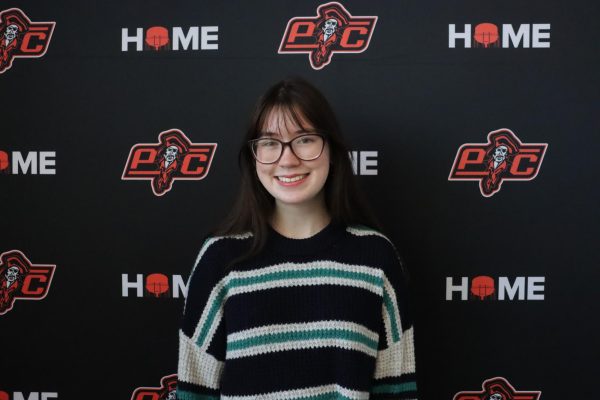
With all of the attention the movement attracted, Club America has similarly not been able to shy away from the spotlight. Senior Indigo Teufel, Club America vice president, explained that their club had been facing extreme backlash from some of the student body to the point of name-calling and harassment.
“We don’t know what we did to deserve it,” Teufel said. “We just want to clear the air if we are offending anyone. We didn’t mean to do that. We’re a non-partisan group, so we’re not affiliated with any political party, though we do have more conservative views.”
While Teufel claims the group to be non-partisan, the TPUSA website describes high school Club America chapters as “inspiring a new wave of conservatism.” Continued in a since-deleted webpage, TPUSA called their student chapters “the largest conservative student movement in the nation.”
Teufel also said that she and the rest of the club felt that there wasn’t a lot of build-up toward the walkout on their end, but she understood that there was definitely more going on on the other side of the issue.
“There was some more tension during the month [of December],” Teufel explained. “It started in October with the ripping down of the [Club America advertisement posters], but then it really got heated in December when there were pictures posted online that people didn’t agree with.”
After coming back to school from winter break, Teufel felt that tensions were at an all-time high. She felt that the build-up wasn’t as obvious to Club America until talk of the walkout began to spread around the school. Despite the walkout being targeted against their club, Teufel believed that students wanting to participate in the protest were entitled to that right.
“If they’re passionate about what they’re doing, then I say you can do it,” Teufel said. The club claimed to support the walkout, but felt it could have been handled differently.
“Open dialogue, I think, is the only way they were going to get through this,” Teufel explained. “If there isn’t an open dialogue in the United States, there will just be violence. I think that it’s great that people have opposing opinions, and I think that’s what makes America so great. I think this open dialogue should be toned down, but continue, so we can get through this bumpy road towards whatever they want to achieve.”